

Merit-Based
Or who decides who deserves the benefits of being an American.

America loves a good meritocracy story. We tell ourselves that hard work, intelligence, and perseverance alone dictate who rises to the top. Some repeat, with unexamined faith, that "merit" is a neutral and objective measure of worthiness. But here’s the thing—who gets to define merit? And what happens when the vast majority of arbiters of merit all come from the same group?
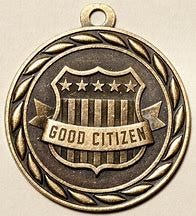
Source: Loria Awards
Merriam-Webster defines merit as "a praiseworthy quality: virtue" or "character or conduct deserving reward, honor, or esteem." At its core, merit is subjective. It depends entirely on who assigns worth. That subjectivity becomes a problem when the same types of people—historically white, wealthy, and male—keep deciding who or what is meritorious.
So, when the White House issued the Executive Order on ‘Ending Illegal Discrimination and Restoring Merit-Based Opportunity’ in January 2025, the phrase ‘merit-based’ wasn’t just a call for fairness. It was a dog whistle. A coded message that signaled a return to defining merit in ways that reinforce existing power structures. This is the real issue. When "merit-based" selection processes produce overwhelmingly white and male recipients, it's not a coincidence—it's a design feature.
In the workplace, hiring managers claim they’re selecting "the best candidate." Yet, their implicit biases ensure that the "best" looks like them—someone who went to the same schools belonged to the same networks, and shared the same cultural references.
We see this pattern repeated in housing, venture capital funding, and law enforcement. Whenever merit is left in the hands of a homogenous group, it often reflects and protects their existing dominance.
Deliberate Disruptions
Three Ways to Disrupt the Misuse of ‘Merit’:
Expand the definition of merit – Push for a broader, more inclusive understanding of qualifications, experience, and talent that values lived experience alongside traditional credentials.
Support policies that level the playing field – Engage in policy advocacy that increases access to resources like education, mentorship, and capital for historically excluded groups.
Challenge biased selection processes – Advocate for hiring, admissions, and promotions transparency. Demand data on who is being selected and who is being left out.
Merit should be a collective standard, not a gatekeeping tool. If we genuinely believed in merit, we’d ensure everyone has access to the resources and opportunities that allow them to develop their talents. That means addressing:
Educational disparities – A child attending an underfunded school with overcrowded classrooms and outdated textbooks has to work twice as hard to achieve the same outcomes as a child in a well-funded district. Yet, meritocracy pretends both students started at the same place.
Workplace discrimination – Women and people of color consistently receive lower performance evaluations than their white male colleagues, even when controlling for qualifications and output. The reason? Bias masquerading as an objective merit system.
Who gets mentorship and sponsorship – Climbing the ladder isn’t just about hard work. It’s about who opens doors for you. When those gatekeepers only lift up people who remind them of themselves, we reinforce the status quo.
If meritocracy is to mean anything, it must be inclusive. It must recognize that opportunity is not evenly distributed and that structural barriers make it harder for some to compete fairly. It means redefining "merit" to reflect diverse perspectives, talents, and lived experiences rather than reinforcing a narrow, exclusionary ideal.
Guiding Questions
Who originally defined ‘merit’ in my workplace, school, or industry?
When I think of ‘high achievers’ or ‘top talent,’ who comes to mind? What common characteristics do they share?
How can I advocate for a more inclusive understanding of merit in my professional or community spaces?
Notes
White House Executive Order
Ending Illegal Discrimination And Restoring Merit-Based Opportunity – The White House
The National Council of Nonprofits